


Visit Environment Protection and Study Center's you tube channel to get access to latest video blogs, commentaries, and updates posted and stay notified to latest videos by clicking on the subscribe button.


At a Glance
 Globally, human population and resulting influences are growing at an unprecedented rate and so are the environmental problems. As a result of which, life support systems are believed to have advanced towards the critical threshold. However, much of the population remains either unaware of the issues or show reluctance in absence of sufficient evidence. This scenario has degraded the environmental quality and thus the quality of life. Understanding the complexity of environmental problems and stakeholders’ concern through multidisciplinary approaches are essential to maintain environmental quality. It is, thus a prime time to think and work on actions from local to global scales to secure sustainable living.
Who we are
Follow us
News & Events

Wings across the gradient: butterfly diversity declines along an urbanization gradient in the subtropical Himalayas
Urbanization is a major driver of biodiversity loss, particularly in regions with weak environmental governance. While concerns about sustainable urban development and biodiversity conservation are increasing, urban planning rarely considers lower vertebrates and invertebrates. This study conducted a field survey in Nepal’s Kathmandu Valley, comprising Kathmandu, Lalitpur and Bhaktapur districts, to assess how butterflies respond […]
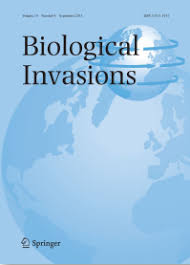
Correlating Ageratina adenophora biomass with road proximity in a forested habitat.
Invasive alien plant species (IAPs) are one of the major threats to biodiversity conservation. Roads, both existing and newly constructed, facilitate the invasion process through their influence on habitat structure and anthropogenic interferences. However, the impact of roads are not uniform and varies with time and space. Understanding how the roads and forest structure influence […]
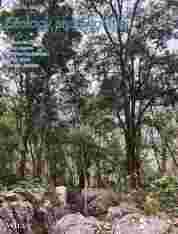
Investigating the Trend of the Great Slaty Woodpecker (Mulleripicus pulverulentus) Population Status in Western Nepal.
The Great Slaty Woodpecker (Mulleripicus pulverulentus) has experienced a rapid population decline due to the loss of primary forest habitats across its range. Despite being classified as globally Vulnerable, detailed information regarding its status and distribution is largely insufficient and outdated. To address this, we conducted surveys from 2019 to 2021 in the western Terai […]

Spatio-Temporal Trends in Wildlife-Vehicle Collisions: Implications for Socio-Ecological Sustainability.
The conservation of biodiversity and the balance between ecological and societal needs are critical but often contested global issues. Wildlife-vehicle collision (WVC) on vital infrastructure, especially linear infrastructure, remains a persistent challenge from policy to practice and poses a serious life-threatening implication to humans and other non-human lives. Addressing this issue effectively requires solutions that […]

A preliminary checklist of butterflies (Lepidoptera: Rhopalocera) of Dhorpatan Valley, Dhorpatan Hunting Reserve, Nepal.
Butterfly species were studied in the Dhorpatan Valley, situated in the western region of Nepal, during the pre-monsoon and monsoon seasons of 2021 and 2022. This preliminary study documented forty-three species of butterflies from five families Lycaenidae, Pieridae, Nymphalidae, Papilionidae, and Hesperiidae. A purposive sampling method was applied to locate various butterfly species across elevations ranging 2,846–4,000 m. This study recorded Polyommatus nepalensis, an […]
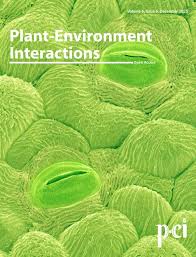
Forest Structure, Diversity, and Regeneration in a Community‐Managed Forest of Nepal: A Model for Carbon Sequestration and Sustainable Management.
Community forestry, a participatory forest management system, encourages forest conservation, enhances carbon sequestration, and advances the Sustainable Development Goals (SDGs) by increasing community ownership of resource management. Community forestry, in terms of policies and practices, directly supports SDG-1, SDG-13, and SDG-15 by promoting community ownership and empowerment as well as ecosystem health. It provides immediate […]
Contact us
Environment Protection and Study Center
Baneshwor, 10
Kathmandu Metropolitan City
Kathmandu, Bagmati Province,
Nepal
Phone no: +977-01-4564997
Email: info@enprosc.org.np